

Which oil for frying and which for salad?
No oil is best for everything. Each oil has its own flavour and its own fat composition, and they suit different jobs to different degrees. Here is a starting point:
- Which oil for frying: rapeseed oil or olive oil in everyday cooking. The Swedish Food Agency names both as excellent for frying.
- Salad oil: extra virgin olive oil gives the most character, while rapeseed oil or a mild blend gives a lighter dressing.
- Baking: a neutral oil such as rapeseed or sunflower, or a mild olive oil if you want a hint of flavour.
- Deep frying: a neutral oil, for example sunflower oil or a frying oil made for the purpose.
The fatty acids in the oils, in plain words
All cooking oils are made of fat, but the fat comes in different kinds. Monounsaturated fat is plentiful in olive oil. Polyunsaturated fat, which includes omega-6 and omega-3, is plentiful in sunflower oil, corn oil and rapeseed oil. Saturated fat is found in butter and coconut oil, for example.
The Swedish Food Agency has analysed oils on the Swedish market. The share of monounsaturated fatty acids was highest in olive oil, at 77 per cent. The share of polyunsaturated was highest in sunflower oil, at 59 per cent. Sunflower oil and corn oil contain more than 50 per cent linoleic acid, an omega-6 fatty acid. Rapeseed oil contains the most alpha-linolenic acid, an omega-3 fatty acid, and one tablespoon of rapeseed oil provides a little over a third of the recommended daily intake.
Of all the oils analysed, rapeseed oil had the highest share of unsaturated fatty acids, just over 90 per cent. The agency recommends oils and liquid cooking fats instead of butter to get more unsaturated and less saturated fat.
Fat composition also affects how the oil behaves when heated. Oils with a lot of polyunsaturated fat oxidise more readily, according to a study in which oils were heated for six hours at 180 °C. For normal frying at home the effect is small, according to the Swedish Food Agency, but in prolonged deep frying the choice weighs more.
Olive, rapeseed, sunflower and corn oil one by one
- Extra virgin olive oil: fruity, often slightly grassy or peppery. Best raw, on salads and bread and for drizzling over finished food. It also works well for frying.
- Olive oil (refined and virgin): mild and neutral with a hint of olive. An everyday choice for frying, baking and dressings.
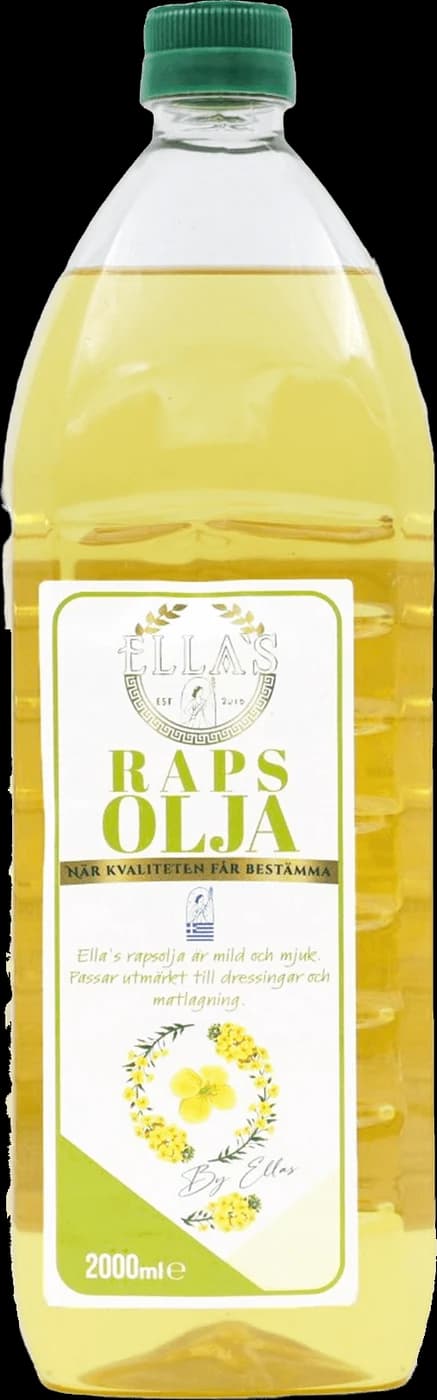
- Rapeseed oil: mild and smooth, with plenty of monounsaturated fat and the omega-3 fatty acid the body cannot make itself. Works in dressings, baking and frying.
- Sunflower oil: refined sunflower oil has a mild, neutral flavour. It is rich in polyunsaturated fat and in vitamin E. Often used for frying, baking and deep frying.
- Corn oil: light and mild with a natural flavour. High in linoleic acid. Suits frying and dressings.
Flavour is often what decides it. If you want the oil to be noticed in the food, choose olive oil. If you want other flavours to come through, a neutral oil is better.
Comparison: which oil suits what?
| Oil | Flavour | Main fat | Best for | Less suited to |
|---|---|---|---|---|
| Extra virgin olive oil | Fruity, peppery | Monounsaturated | Salads, finishing, gentle frying | Large-scale deep frying |
| Olive oil (refined and virgin) | Mild, neutral | Monounsaturated | Frying, baking, dressings | Dressings where flavour should show |
| Rapeseed oil | Mild, smooth | Monounsaturated, plenty of omega-3 | Dressings, baking, frying | Dishes where olive flavour is wanted |
| Sunflower oil | Neutral | Polyunsaturated (omega-6) | Frying, baking, deep frying | Dressings where flavour should show |
| Corn oil | Light, mild | Polyunsaturated (omega-6) | Frying, dressings, baking | Dressings where flavour should show |
Olive oil blends and olive pomace oil
A blend combines a virgin olive oil with a cheaper and milder base oil, often refined sunflower oil. The flavour is lighter than pure extra virgin olive oil and the price lower, and the blend copes well with frying. It suits everyday cooking, baking and professional kitchens.
Olive pomace oil is something else. After the olives are pressed, pressing residue remains. Remaining oil can be extracted from it with physical and chemical methods, and it must be refined before it may be sold to consumers. It is one of the four categories that may be sold in shops, according to the Swedish Food Agency.
Pomace oils have a mild flavour and are often used for frying. If you want the fruity character of an extra virgin olive oil, this is not where you find it.
Blends in the Ella's range
The Ella's range includes several blends. The details come from the product descriptions.
- Olive Oil Mix: virgin olive oil and refined sunflower oil. Described as more flavourful and aromatic than ordinary blends, and intended for salads, frying and baking.
- Salad oil: 80 per cent refined sunflower oil and 20 per cent virgin olive oil. Mild, with a light olive oil taste, and suitable for frying and baking at high temperatures as well as for salads.
- Riviera oil: 90 per cent olive pomace oil and 10 per cent vitamin E oil. Described as suitable for frying, baking and salad dressing.
- Olive oil: 75 per cent refined olive oil and 25 per cent virgin olive oil, with a mild and neutral flavour for daily cooking.
The neutral oils category includes rapeseed oil, sunflower oil and corn oil in several sizes, and the catering range has larger packs. Where can you buy Ella's? Ask in your local shop or contact us.
Common questions
Which oil should you fry in?
Rapeseed oil and olive oil both work excellently, according to the Swedish Food Agency. Choose olive oil if you want some flavour and rapeseed oil if you want something neutral.
Rapeseed oil or olive oil, which is better?
Neither is best for everything. Olive oil has the most monounsaturated fat and more flavour, while rapeseed oil has plenty of omega-3 and a mild taste. Both are fine for frying and dressings.
Which oil suits salad dressing?
Extra virgin olive oil gives the most character, while rapeseed oil and mild blends make a lighter dressing. The Swedish Food Agency suggests a vinaigrette made with rapeseed or olive oil.
What is olive pomace oil?
Oil extracted from the pressing residue after olives are pressed and then refined. It is sold as olive pomace oil and has a mild flavour.


Sources
- Matfett och oljor: analys av fettsyror och vitaminer (Rapport 9/2014)Livsmedelsverket
- Matfetter (kostråd för vuxna)Livsmedelsverket
- Fleromättat fett, omega-3, omega-6Livsmedelsverket
- Så här fungerar det nationella kontrollprogrammet för olivoljaLivsmedelsverket
- Evaluation of Chemical and Physical Changes in Different Commercial Oils during Heating (De Alzaa, Guillaume, Ravetti, 2018)Acta Scientific Nutritional Health 2(6)

